Author: Iman Ebrahimi

  • Do Bird Flight Diverters Work? Lessons from Research and the Field

    5–7 minutes
    1,162 words

    In Abbas Abad Wildlife Refuge in Iran, we installed 450 spiral bird flight diverters along 7 kilometres of power lines to reduce collisions involving Asian Houbara (Chlamydotis macqueenii).

    Before the intervention, nine collisions had been recorded during our monitoring period. In the year following installation, we recorded none.

    It was an encouraging result, which we later published in ECOPERSIA. But after years of working on bird conservation, I think there are several things we should consider before deciding how effective flight diverters really are.

    What Do We Know About Bird Flight Diverters?

    They work, but not equally for every bird

    Bird flight diverters are devices attached to overhead wires to make them more visible to flying birds. They come in different shapes and colours, including spirals and moving devices known as flappers.

    There is good evidence that they reduce bird collisions. For example, Ferrer et al. (2020) found that flappers reduced average bird mortality by about 70% compared with unmarked spans in Spain.

    However, results are not always consistent between species. A large study in South Africa found a 92% reduction in collisions involving Blue Cranes, but no detectable reduction for bustards (Shaw et al., 2021).

    This does not mean diverters are ineffective. It means we should be careful about applying the results of one study to every bird and every location.

    What about the bird’s blind spot?

    One factor that I think deserves particular attention is the blind area in front of a flying bird.

    Studies of bustards, cranes, and storks have shown that the position of the head can make a bird temporarily blind in its direction of travel (Martin & Shaw, 2010).

    But there is still a lot we do not know. For example, how much do different birds move their heads when flying at low altitudes? How often do these movements change their visual fields just before approaching a power line?

    This could be a very important factor in understanding collisions. A diverter may be perfectly visible from one angle but still fall outside a bird’s field of vision at a critical moment.

    We should not assume that making a wire more visible to us necessarily makes it sufficiently visible to every bird.
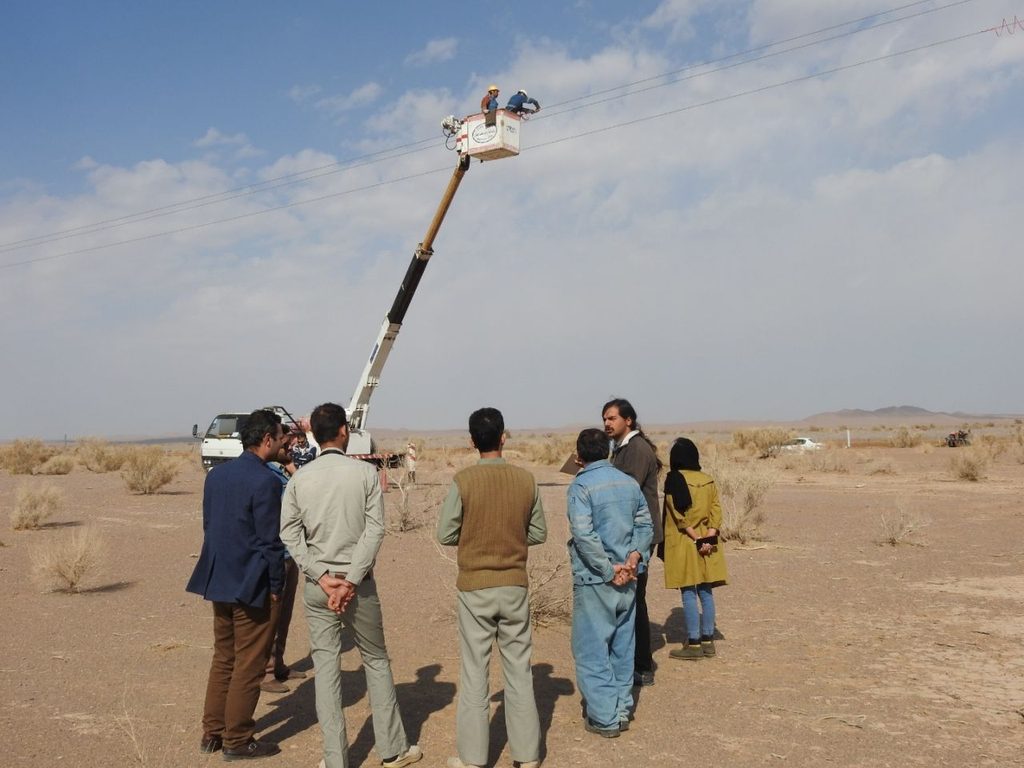
    Fieldwork during our Asian Houbara power line collision mitigation project in Abbas Abad Wildlife Refuge, Iran.

    Why I Recommend Testing Diverters in the Field

    Start with a pilot project

    One of the best approaches, in my opinion, is to begin with a pilot.

    Before installing diverters across a large network, we can identify collision hotspots, select a suitable section, and monitor what happens before and after installation.

    When possible, comparison sections and observations of bird flight activity can help us interpret the results more accurately. Counting carcasses alone may not tell us the full story.

    Still, even a well-designed pilot has limitations.

    Five years later, our birds were gone

    Our experience in Abbas Abad provides an example.

    The original project was successful during the monitoring period reported in our published study. But when we returned about five years later to continue monitoring, the situation had changed.

    The Houbara were no longer using the area as before. They had been associated with nearby alfalfa fields, but those fields had been converted into pistachio orchards.

    The birds had gone, and continuing the same monitoring was no longer possible in the way we had planned.

    This is something I think we should remember when designing pilot projects. Habitats change, agriculture changes, and bird movements change with them. A result obtained during one period may not tell us what will happen five or ten years later.

    Practical Lessons Before Installing Diverters

    Distribution lines and the real cost of installation

    I consider diverters a practical and effective mitigation method, particularly for smaller distribution lines where installation can be relatively straightforward.

    One important advantage is the possibility of temporarily switching off the line during installation, commonly called de-energising or making the line cold. Where a planned shutdown is possible, this may reduce the need for more expensive live-line installation procedures and help control costs.

    However, estimating the cost of a diverter project is genuinely difficult.

    It depends on the type of line, accessibility, available equipment, local technical capacity, and many other factors. National and local regulations, particularly those concerning electricity supply and citizens’ rights, can also influence whether a line can be switched off and how much the operation will cost.

    I would be very cautious about using a fixed cost per kilometre without first understanding these conditions.

    Colour matters, especially in desert environments

    Choosing the colour of a diverter is another important decision.

    We may select a colour because we expect birds to detect it more easily against the background. Research has compared orange and yellow spirals, for example, and found differences in their performance (Ferrer et al., 2020).

    But there is another problem that deserves attention: colour deterioration.

    In desert countries, strong sunlight and harsh environmental conditions can gradually cause diverters to lose their colour. After several years, a coloured diverter may become practically colourless.

    So, when selecting a device, I would consider not only its initial visibility but also the durability of its colour and material. Long-term inspection and replacement should be part of the plan.
    Use the installation to communicate with people

    I have one more recommendation, which is less technical.

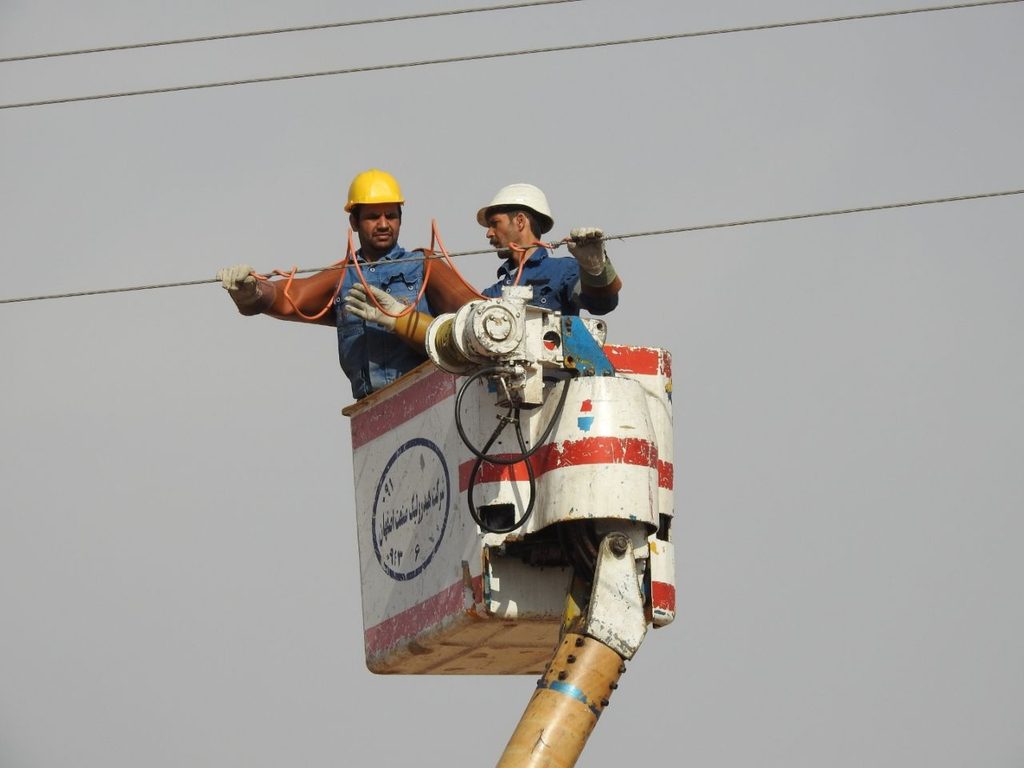
    Installing diverters is a good opportunity to communicate the importance of bird conservation to local people and authorities.

    When electricity workers are carrying out a serious operation on power lines specifically to save birds, conservation becomes something people can actually see.

    I would encourage conservation teams to involve their communication and public relations colleagues during these operations. They can explain why the birds matter, why their protection is important internationally, and why this work deserves local support.

    Sometimes an installation project can also become a useful opportunity to strengthen the relationship between conservation organisations, local communities, and electricity companies.

    Final Thoughts

    Bird flight diverters are a useful tool for reducing collisions, and I would recommend considering them wherever power lines threaten birds.

    But their effectiveness depends on the species, the location, the device, and the conditions in which it is used. We also need to think about how these conditions may change over time.

    For me, the most useful approach is to combine the available scientific evidence with local knowledge, a carefully designed pilot, and continued monitoring.

    And when possible, use the intervention to help people understand why protecting birds matters.


    References

    • Ebrahimi, I., Kazemi, F., & Agha Ebrahimi, M. A. (2024). Effectiveness of Spiral Diverters in Preventing Asian Houbara Power Line Collisions in Abbas Abad Wildlife Refuge, Iran. ECOPERSIA, 12(4), 405–412. DOI
    • Ferrer, M., et al. (2020). Efficacy of different types of bird flight diverter in reducing bird mortality due to collision with transmission power lines. Global Ecology and Conservation, 23, e01130. DOI
    • Shaw, J. M., et al. (2021). A large-scale experiment demonstrates that line marking reduces power line collision mortality for large terrestrial birds, but not bustards, in the Karoo, South Africa. Ornithological Applications, 123(1), duaa067. DOI
    • Martin, G. R., & Shaw, J. M. (2010). Bird collisions with power lines: Failing to see the way ahead? Biological Conservation, 143(11), 2695–2702. DOI

  • What Are the Human Dimensions of Wildlife Conservation?

    A project is underway to reintroduce wolves to a protected area. Wolves disappeared from this area many years ago, but local people still have memories of their presence. In such a situation, we know that the project will have human dimensions. Are local people happy about the return of wolves, or are they worried? Before…

    6–9 minutes

    A project is underway to reintroduce wolves to a protected area. Wolves disappeared from this area many years ago, but local people still have memories of their presence.

    In such a situation, we know that the project will have human dimensions. Are local people happy about the return of wolves, or are they worried? Before the wolves disappeared, were they a source of pride for the community, or did people dislike having them around?

    These questions, and the complexities behind them, are part of what we call the human dimensions of wildlife.

    The answers could change the project. They might tell us where conflicts are likely, whom we need to involve, and even whether the proposed approach makes sense. To understand wildlife conservation, we sometimes need to spend as much time learning about people as we spend studying animals.

    natural habitat and a village, illustrating the human dimensions of wildlife reintroduction.

    What Do the Human Dimensions of Wildlife Include?

    Wildlife conservation is about more than animals and habitats. From returning wolves to protected areas to working with local communities, human dimensions help us understand how people’s values, experiences, and decisions influence conservation.

    People who share their lives with wildlife

    Wildlife lives in landscapes that people also use, remember, and make decisions about. A forest may be a habitat for bears and also a place where families collect firewood. A wetland may support migratory birds and provide income for fishers. Even a remote protected area is affected by decisions made in offices, villages, and cities.

    Human dimensions of wildlife is a field concerned with these relationships. It examines how people think about wildlife, how they behave towards it, what they expect from its management, and how social conditions shape conservation decisions. Wildlife management has long drawn on this perspective, including in the work brought together by Decker, Riley, and Siemer (2012).

    Values, livelihoods, and behaviour

    Imagine two farmers who lose the same number of chickens to a wild predator. One may accept the loss as part of living near a protected area. The other may see it as evidence that conservation authorities do not care about local people. Their economic losses are similar, but their responses may be quite different.

    To understand this difference, we might study their past experiences, income, beliefs, trust in institutions, and the options available to them. These are all human dimensions. They also include local traditions, social norms, laws, political influence, and the distribution of costs and benefits.

    This is why interviewing people about whether they like a species is rarely enough. We need to understand what the species means in their daily lives.

    Where conservation psychology fits

    My academic background is in psychology, so I often begin with questions about perception, motivation, and behaviour. Why does someone protect an animal? Why does another person continue a harmful practice even when they know its ecological consequences? How do experiences with nature shape what people care about?

    Conservation psychology helps us explore such questions, including the relationships between people and nature and the reasons behind conservation-related actions (Saunders, 2003). But psychology is only one part of the picture. Economics, sociology, anthropology, political science, and other disciplines help explain things that individual attitudes alone cannot.

    A person may want to protect wildlife and still have very little power to change what happens to it.

    What Human Dimensions Look Like in Conservation Practice

    When living with birds creates problems

    In one of our projects at AvayeBoom, we worked with beekeepers who were concerned about bee-eaters visiting their apiaries. From a bird conservation perspective, we wanted to reduce harm to the birds. But for a beekeeper, the immediate concern was the possible loss of bees and income.

    It would have been easy to prepare an educational message about the ecological importance of bee-eaters. Instead, we tried to understand what beekeepers were experiencing and provide practical information and recommendations suited to their situation. We later followed up with participants to learn what they reported doing and how they perceived the conflict.

    That follow-up was useful, although self-reported changes cannot, on their own, prove that our intervention caused an improvement. This is an important part of working with human dimensions: listening carefully, and being equally careful about what the evidence tells us.

    When a bird becomes part of a community

    At Arjan Wetland in southern Iran, we faced a different question. We wanted to select a bird that could help strengthen the relationship between local communities and the wetland.

    The obvious choice might have been a rare or threatened bird. But rarity is not necessarily what makes a species meaningful to local people. We considered ecological, social, and cultural criteria, then selected the Ruddy Shelduck, locally known as Anghut, as a flagship species (Ebrahimi et al., 2024).

    The project went on to involve schools, local activities, and opportunities for people to recognise the bird as part of the place where they live. We also monitored changes in people’s awareness and attitudes. These measures mattered alongside bird counts, because the aim was partly to build a relationship that could support conservation over time.

    Rules, trust, and the power to decide

    Some human dimensions are less visible than people’s feelings about animals. Consider a community that supports protecting a wetland, but has little confidence that conservation rules will be applied fairly. Or a ranger who understands a problem but has neither the resources nor the authority to address it.

    In these situations, more awareness campaigns may achieve very little. The problem may lie in institutional arrangements, access to resources, or the history of relationships between different groups.

    Research in conservation social science has shown how understanding such social and institutional conditions can improve conservation decisions (Bennett et al., 2017). In practice, it means asking who is involved in making decisions, who carries the costs, and who has a genuine opportunity to influence the outcome.

    How Can We Include Human Dimensions in Conservation Projects?

    Ask questions before designing the intervention

    Human dimensions work does not always require a large research programme. Sometimes it begins with a few good questions and a willingness to hear answers we did not expect.

    Who uses this area, and for what? Who benefits if the project succeeds? Who might lose something? What do people remember about earlier conservation attempts? Which people are usually invited to meetings, and which people are left out?

    The methods depend on the question. Interviews and discussions can help us understand experiences and relationships. Surveys can show how common certain views are. Observation may reveal a gap between what people say and what they actually do. We can combine these with ecological data and revise the project as we learn more.

    Most importantly, the findings should be allowed to change our plans. There is little value in asking people for their views if every decision has already been made.

    Measure what changes for people

    Conservation projects often report hectares protected, animals counted, or threats removed. These indicators are essential, but they may not explain why an intervention worked or whether its results will last.

    We can also look at changes in behaviour, trust, local participation, attitudes, and the ability of institutions to continue the work. The choice of indicators should follow the project’s goals. A training event, for example, is evidence that people attended. It does not automatically show that their behaviour changed.

    The wolf project we started with might succeed in releasing wolves and still struggle if it damages trust with neighbouring communities. It might also create new cooperation that was absent before. Both outcomes deserve to be understood, alongside what happens to the wolves themselves.

    Wildlife conservation takes place in ecological systems, but its decisions are made and carried out by people. Understanding the human dimensions helps us design projects that make sense in the places where they will actually happen. And sometimes, it changes what we thought the conservation problem was in the first place.


    References

    Decker, D. J., Riley, S. J., & Siemer, W. F. (Eds.). (2012). Human Dimensions of Wildlife Management (2nd ed.). Johns Hopkins University Press. https://doi.org/10.56021/9781421406541

    Saunders, C. D. (2003). The emerging field of conservation psychology. Human Ecology Review, 10(2), 137–149. Read article

    Bennett, N. J., et al. (2017). Conservation social science: Understanding and integrating human dimensions to improve conservation. Biological Conservation, 205, 93–108. https://doi.org/10.1016/j.biocon.2016.10.006

    Ebrahimi, I., Dai, R., Kazemi, F., & Seifii, A. (2024). Selecting a flagship species for Arjan International Wetland in Iran. Journal of Wildlife and Biodiversity, 8(4), 364–383. https://doi.org/10.5281/zenodo.13835306