In Abbas Abad Wildlife Refuge in Iran, we installed 450 spiral bird flight diverters along 7 kilometres of power lines to reduce collisions involving Asian Houbara (Chlamydotis macqueenii).
Before the intervention, nine collisions had been recorded during our monitoring period. In the year following installation, we recorded none.
It was an encouraging result, which we later published in ECOPERSIA. But after years of working on bird conservation, I think there are several things we should consider before deciding how effective flight diverters really are.
What Do We Know About Bird Flight Diverters?
They work, but not equally for every bird
Bird flight diverters are devices attached to overhead wires to make them more visible to flying birds. They come in different shapes and colours, including spirals and moving devices known as flappers.
There is good evidence that they reduce bird collisions. For example, Ferrer et al. (2020) found that flappers reduced average bird mortality by about 70% compared with unmarked spans in Spain.
However, results are not always consistent between species. A large study in South Africa found a 92% reduction in collisions involving Blue Cranes, but no detectable reduction for bustards (Shaw et al., 2021).
This does not mean diverters are ineffective. It means we should be careful about applying the results of one study to every bird and every location.
What about the bird’s blind spot?
One factor that I think deserves particular attention is the blind area in front of a flying bird.
Studies of bustards, cranes, and storks have shown that the position of the head can make a bird temporarily blind in its direction of travel (Martin & Shaw, 2010).
But there is still a lot we do not know. For example, how much do different birds move their heads when flying at low altitudes? How often do these movements change their visual fields just before approaching a power line?
This could be a very important factor in understanding collisions. A diverter may be perfectly visible from one angle but still fall outside a bird’s field of vision at a critical moment.
We should not assume that making a wire more visible to us necessarily makes it sufficiently visible to every bird.
Why I Recommend Testing Diverters in the Field
Start with a pilot project
One of the best approaches, in my opinion, is to begin with a pilot.
Before installing diverters across a large network, we can identify collision hotspots, select a suitable section, and monitor what happens before and after installation.
When possible, comparison sections and observations of bird flight activity can help us interpret the results more accurately. Counting carcasses alone may not tell us the full story.
Still, even a well-designed pilot has limitations.
Five years later, our birds were gone
Our experience in Abbas Abad provides an example.
The original project was successful during the monitoring period reported in our published study. But when we returned about five years later to continue monitoring, the situation had changed.
The Houbara were no longer using the area as before. They had been associated with nearby alfalfa fields, but those fields had been converted into pistachio orchards.
The birds had gone, and continuing the same monitoring was no longer possible in the way we had planned.
This is something I think we should remember when designing pilot projects. Habitats change, agriculture changes, and bird movements change with them. A result obtained during one period may not tell us what will happen five or ten years later.
Practical Lessons Before Installing Diverters
Distribution lines and the real cost of installation
I consider diverters a practical and effective mitigation method, particularly for smaller distribution lines where installation can be relatively straightforward.
One important advantage is the possibility of temporarily switching off the line during installation, commonly called de-energising or making the line cold. Where a planned shutdown is possible, this may reduce the need for more expensive live-line installation procedures and help control costs.
However, estimating the cost of a diverter project is genuinely difficult.
It depends on the type of line, accessibility, available equipment, local technical capacity, and many other factors. National and local regulations, particularly those concerning electricity supply and citizens’ rights, can also influence whether a line can be switched off and how much the operation will cost.
I would be very cautious about using a fixed cost per kilometre without first understanding these conditions.
Colour matters, especially in desert environments
Choosing the colour of a diverter is another important decision.
We may select a colour because we expect birds to detect it more easily against the background. Research has compared orange and yellow spirals, for example, and found differences in their performance (Ferrer et al., 2020).
But there is another problem that deserves attention: colour deterioration.
In desert countries, strong sunlight and harsh environmental conditions can gradually cause diverters to lose their colour. After several years, a coloured diverter may become practically colourless.
So, when selecting a device, I would consider not only its initial visibility but also the durability of its colour and material. Long-term inspection and replacement should be part of the plan.
Use the installation to communicate with people
I have one more recommendation, which is less technical.
Installing diverters is a good opportunity to communicate the importance of bird conservation to local people and authorities.
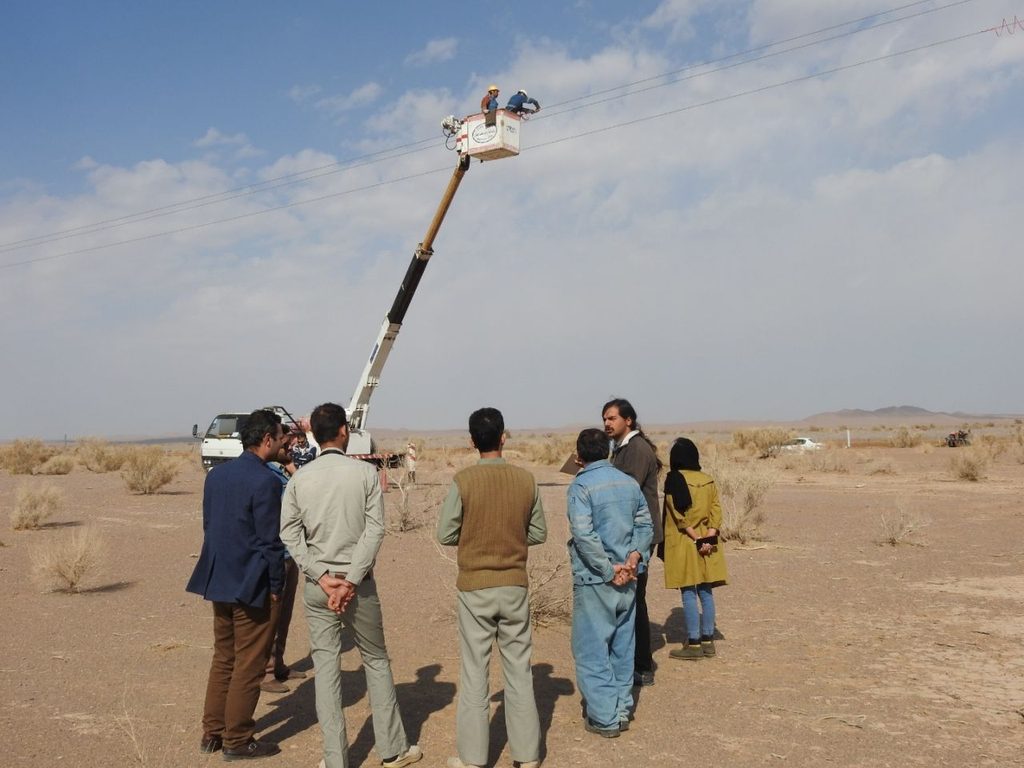
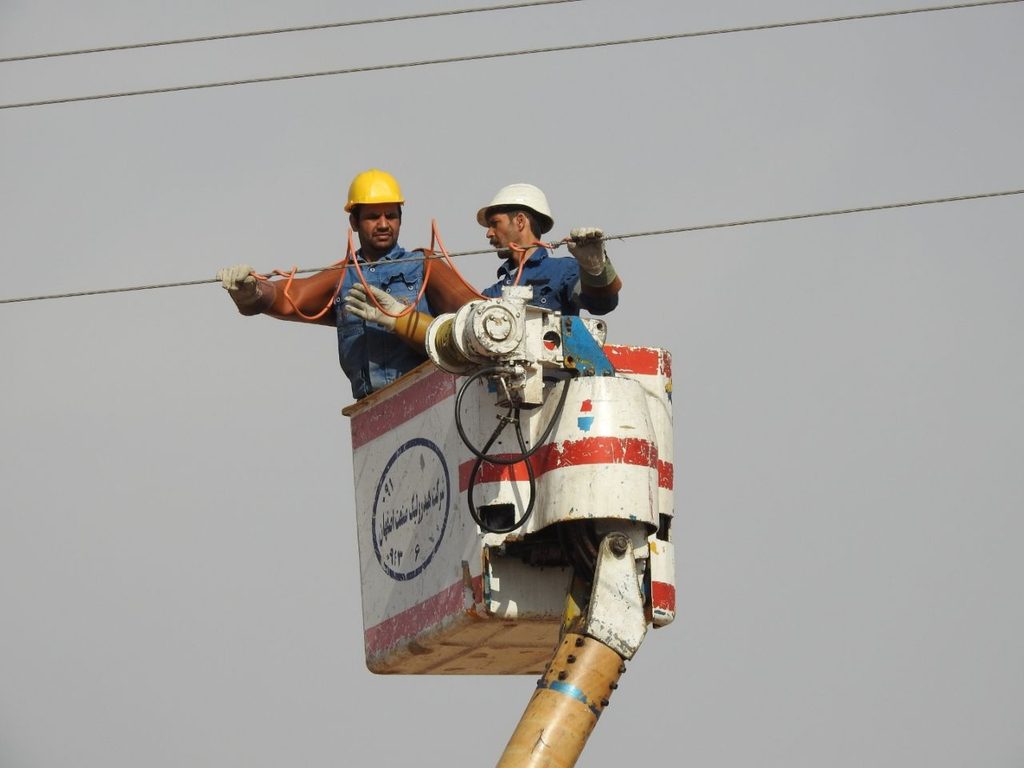
When electricity workers are carrying out a serious operation on power lines specifically to save birds, conservation becomes something people can actually see.
I would encourage conservation teams to involve their communication and public relations colleagues during these operations. They can explain why the birds matter, why their protection is important internationally, and why this work deserves local support.
Sometimes an installation project can also become a useful opportunity to strengthen the relationship between conservation organisations, local communities, and electricity companies.
Final Thoughts
Bird flight diverters are a useful tool for reducing collisions, and I would recommend considering them wherever power lines threaten birds.
But their effectiveness depends on the species, the location, the device, and the conditions in which it is used. We also need to think about how these conditions may change over time.
For me, the most useful approach is to combine the available scientific evidence with local knowledge, a carefully designed pilot, and continued monitoring.
And when possible, use the intervention to help people understand why protecting birds matters.
References
- Ebrahimi, I., Kazemi, F., & Agha Ebrahimi, M. A. (2024). Effectiveness of Spiral Diverters in Preventing Asian Houbara Power Line Collisions in Abbas Abad Wildlife Refuge, Iran. ECOPERSIA, 12(4), 405–412. DOI
- Ferrer, M., et al. (2020). Efficacy of different types of bird flight diverter in reducing bird mortality due to collision with transmission power lines. Global Ecology and Conservation, 23, e01130. DOI
- Shaw, J. M., et al. (2021). A large-scale experiment demonstrates that line marking reduces power line collision mortality for large terrestrial birds, but not bustards, in the Karoo, South Africa. Ornithological Applications, 123(1), duaa067. DOI
- Martin, G. R., & Shaw, J. M. (2010). Bird collisions with power lines: Failing to see the way ahead? Biological Conservation, 143(11), 2695–2702. DOI
Leave a Reply